
The first hour
after a leak
Almost every house out here sits on a concrete slab. There is no basement for water to run into, so it spreads sideways instead, and that changes what you should do first.
What the water is doing while you wait
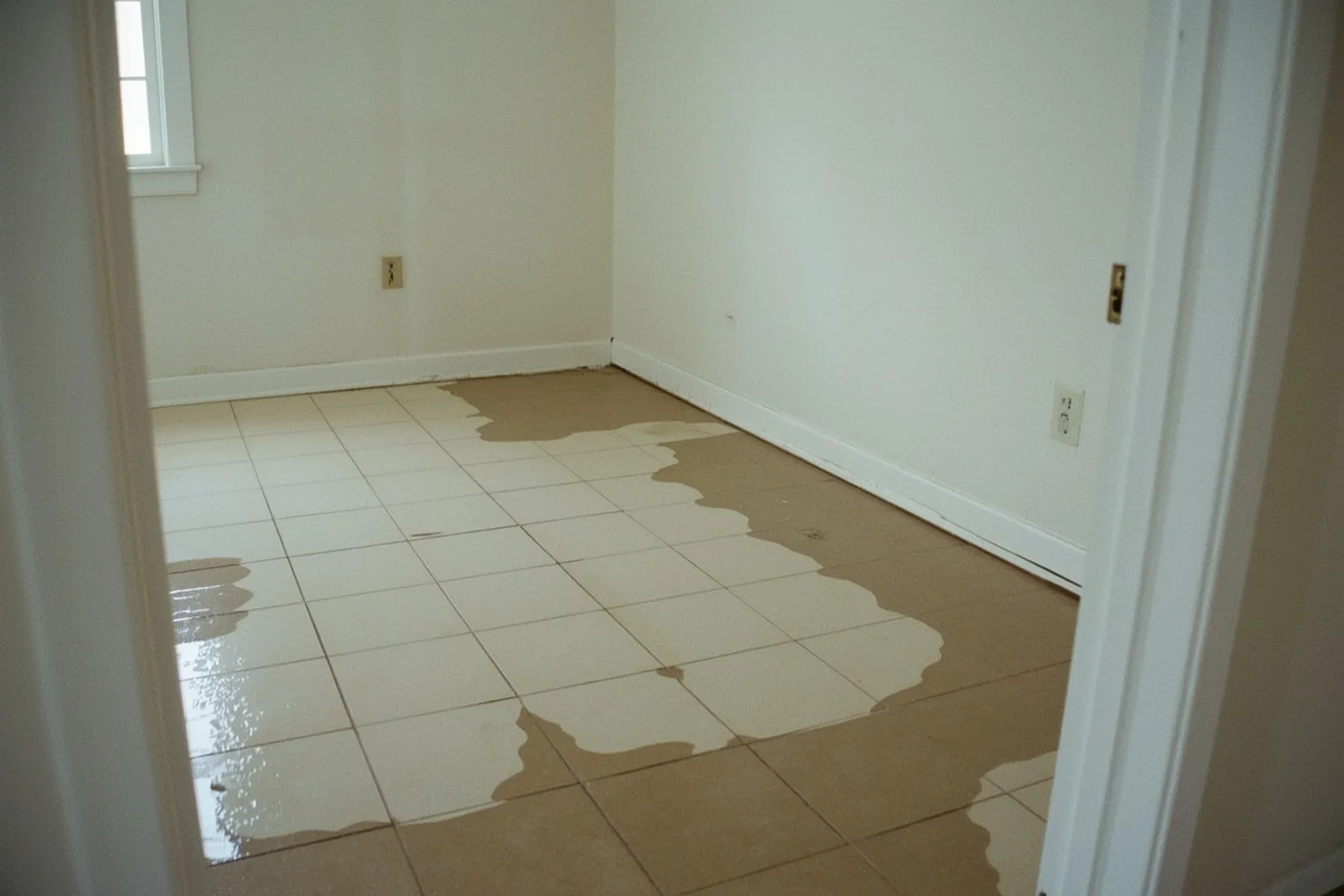
Tile and grout are not waterproof. Grout is porous, the thinset under it is porous, and the slab beneath will take on moisture and hold it. Within an hour, water that pooled in one room has usually reached the bottom plate of two or three walls, because the path of least resistance runs under the tile rather than over it.
Drywall does the rest. Paper faced gypsum board draws water upward against gravity, which is why the damp line on a wall keeps climbing for hours after the leak has stopped. By the time the band is obvious from across the room, the cavity behind it has been wet for a while.
None of this is a reason to panic. It is the reason a drying plan is built from moisture readings rather than from what the wall looks like, and the reason a crew opens a small inspection cut instead of guessing.
Six things worth doing
They are in order, and the order matters. Everything here is something a homeowner can do without equipment and without training.
- 01
Stop it at the main
Not at the fixture stop, which has been sitting in hard water for years and may turn without sealing. On most houses here the main is on the street side of the building near a hose bib, or in a plastic box at the property line. On newer construction in Verrado, Estrella Mountain Ranch and the Buckeye subdivisions there is often a ball valve on the garage wall, which is the easiest one to work in the dark. Find yours in daylight, before you need it.
- 02
Kill the power first
Outlets in a slab house sit low on the wall, close to the level standing water reaches. If water is anywhere near an outlet, an appliance or a cord, cut the circuit at the panel before you step in. If you cannot reach the panel without crossing the water, do not cross the water.
- 03
Find the source
This is the most valuable thing you will do in the first hour, because the source decides the claim. Clean water from a supply line, a water heater or an angle stop is one situation. Water from a drain, a toilet trap or a sewer line is another and carries a different risk. Water that arrived from outside the building, off the yard or out of a wash, is a third and is usually not covered by the homeowners policy at all. Write down what you saw, in plain words, before the details blur.
- 04
Photograph everything
Wide shots of each affected room, then closer shots of the source, the wet materials and anything damaged. Video walking through helps. Get the water heater serial plate or the failed line in frame if you can do it safely. An adjuster who can see the loss makes decisions faster than one working from a description, and every photograph you take now is one nobody can take later.
- 05
Lift, do not demolish
Rugs off wet tile. Boxes off the closet floor. Furniture legs onto blocks or foil so the finish does not bleed into the carpet. Do not start pulling up flooring or cutting drywall. That is a documented step in the drying plan, and doing it early tends to remove the evidence of how far the water actually went.
- 06
Call the carrier, then call us
Report the loss to your insurance company the same day. Then call {{PHONE}}. Somebody answers at any hour, and the useful conversation is short: what broke, when, and how far the water got.
The water you can see is rarely the water that decides the size of the repair. What decides it is how far the water travelled while it was still moving.
What the policy usually says
Your own policy is the authority, and reading it before a loss is time well spent. This is the shape the argument usually takes.
- 01
A sudden supply failure
A line, a water heater or an appliance failing suddenly is generally covered as sudden and accidental.
- 02
A drain or sewer backing up
Excluded unless the policy carries a water backup endorsement, which is usually inexpensive and usually not bought.
- 03
Water arriving from outside
A wash, sheet flow, a swollen street. Excluded. That is flood, a separate policy with a thirty day waiting period. More in why a house nowhere near water takes on water.
- 04
A leak running for months
Usually excluded as long term seepage rather than a sudden event.
What is in the water decides what can be kept
The category is set by where the water started, and it moves up a step the longer the water sits. Clean water from a burst supply line is Category 1 on the day it happens, and it is not Category 1 by Monday.
| Category | Where it started | What happens to the material |
|---|---|---|
| Category 1 | A supply line, a water heater or an angle stop | Most material can be dried in place if drying starts quickly. |
| Category 2 | A dishwasher, a washing machine, an overflow | Carpet pad and some porous material comes out. |
| Category 3 | Sewage, a drain backup, or water off the ground | Porous material it touched is removed rather than dried. |
What happens when a crew arrives
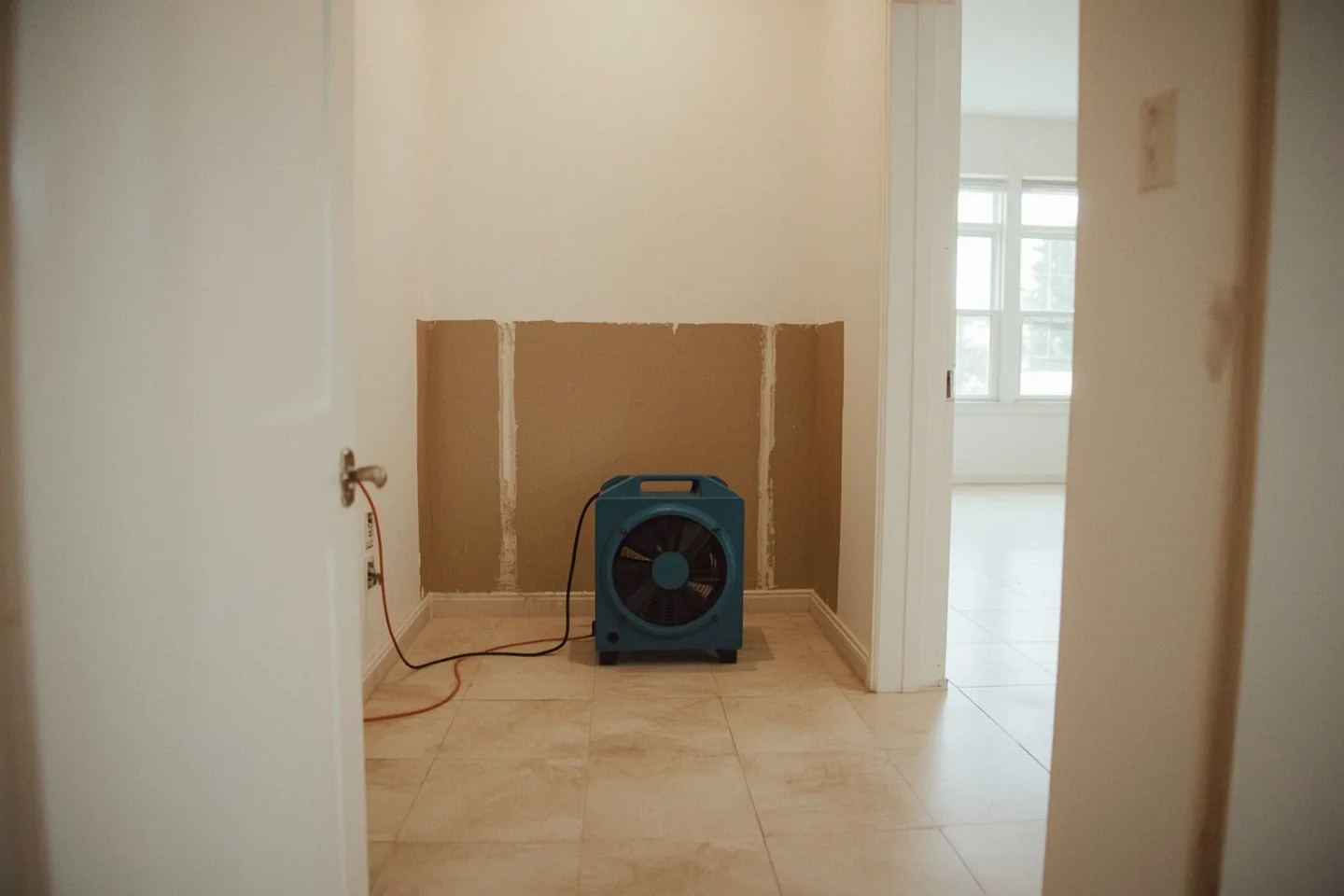
The first visit is measurement, not demolition. A technician maps how far the water travelled using a moisture meter and, where it helps, a thermal camera, and marks the wet perimeter. That map is what the drying plan is built from and what the adjuster is shown.
Then the water comes out, material that cannot be dried in place comes out, and air movers and dehumidifiers go in against the wet assemblies rather than in the middle of the room. Readings are taken daily and written down, because the file the carrier receives has to show the structure reaching a dry standard rather than assert it.
Estimates are written in Xactimate, which is what carriers in this state read, and documentation goes to the adjuster as the job runs rather than in one bundle at the end.
Stop reading.
Call.
Answered by a person, 24 hours a day, every day of the year